The use of hydrogen presents risks inherent to its highly inflammable and explosive nature, requiring rigorous control of systems, upstream during the design phase. Seres Technologies conducts fault analyses (deterministic and probabilistic) to anticipate potential incidents and bolster the safety of infrastructure. For design projects for hydrogen filling stations, Seres Technologies has modelled critical scenarios such as leaks during gas transfer phases. These studies have enabled us to demonstrate the strength of safety barriers, incorporating rapid detection sensors and automatic stop systems to contain risks, and thereby ensure the integrity of the facilities.
Seres Technologies
The Hydrogen Industry
Hydrogen is a highly promising energy vector. Involved in the decarbonisation of energy and backed by its expertise in fuel cells, storage systems and embedded distribution solutions, Seres Technologies supports stakeholders in the mobility and defence sectors in terms of this energy transition. Its innovative projects cover a wide range of vehicles and systems, from cars and buses to trains and charging stations.
Challenges faced by the hydrogen industry
The hydrogen industry is experiencing significant growth, fuelled by considerable investment. However, this expansion comes with significant challenges, particularly in terms of optimising energy costs, sustainable production and storage-related constraints.
To compensate for the low-energy density of hydrogen, manufacturers offer gas (high pressure, 350 bars or 700 bars) and liquid storage solutions. These ultra-innovative solutions must inspire user trust, and Seres Technologies is working with its customers to offer useful, trustworthy technical solutions and safety demonstrations.
Environmental requirements are an additional aspect to consider, as only with the production of eco-friendly hydrogen can we achieve true carbon neutrality.
Backed by its expertise in embedded systems, Seres Technologies supports its customers in developing innovative, reliable solutions, not only for light vehicles but also for trains and aircraft, meeting safety and efficiency requirements.
The Seres Technologies expertise in the hydrogen industry
R&D
Seres Technologies is committed to R&D to accelerate the transition towards sustainable mobility. The company’s expert teams lead innovative projects across various modes of transportation, including vehicles, buses, trains, and aircraft. Seres Technologies designs secure architectures to minimize the risk of incidents.
Another example, this time focused on improving availability, is the use of predictive maintenance algorithms for fuel cells. These solutions help anticipate failures and extend component lifespan, thereby reducing operating costs.
Mechanical Design
The rise of the hydrogen domain raises major challenges in terms of safety, performance and the management of industrial risks. From production to storage, and including transport, each link in the chain requires meticulous engineering and attentive anticipation of critical scenarios. In this landscape, an integrated approach to safety, from the design phase, across the entire system life cycle, is vital to ensure the reliability of infrastructure and increase the acceptability of this future form of energy.
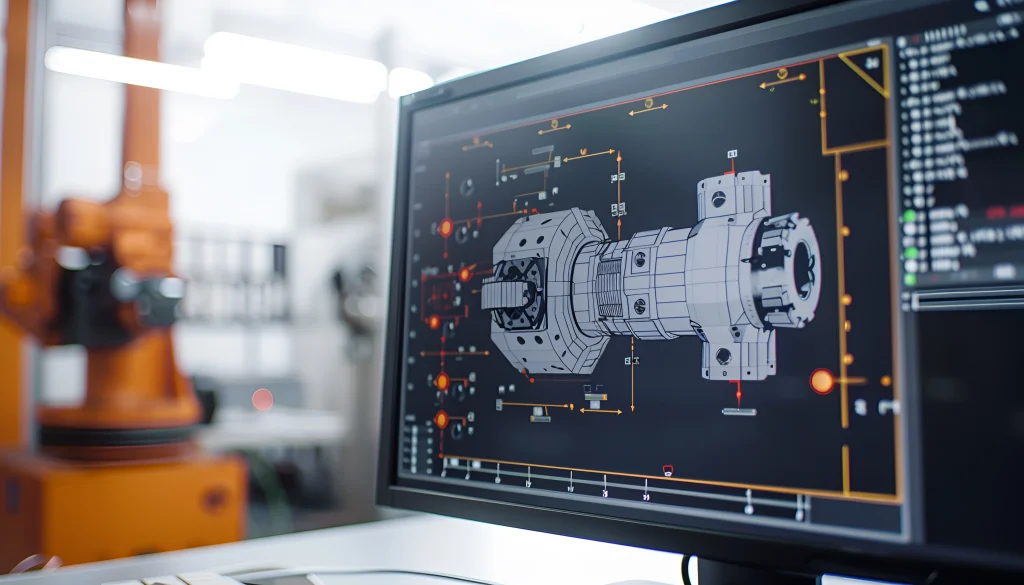
Mekkatronix, Seres Technologies’ design office, helps to design mechanical systems associating PEM fuel cell stacks, hydrogen tanks, cooling systems and embedded structures, in dimensioning and simulation (CAO/CAE) and the specific tools required to successfully integrate PEMFC stack modules into railway materials.
QHSERP
In the hydrogen domain, QHSE has become of strategic importance, particularly owing to the risks related to the handling of this highly flammable and potentially explosive gas. The management of industrial and regulatory technical risks facilitates the deployment of this energy, in absolute safety. Hydrogen risk involves the implementation of suitable prevention devices, operator training, as well as the regular maintenance of facilities. Risk analysis, done by means of methods such as FMECA and HAZOP allow us to anticipate potential faults and boost supply chain resilience. A leading player in managing industrial risks and in complex system development, Seres Technologies offers advanced QHSE expertise to players in the hydrogen industry.
Integrated Logistics Support (ILS)
Seres Technologies supports its customers in optimising systems’ life cycles, drawing on its expertise in Integrated Logistics Support (ILS). From the design phase, this ensures reliability, maintainability and profitability through analyses such as LSA, FMECA and LORA analysis. The company defines maintenance plans, dimensions stocks and develops predictive maintenance solutions.
Expert Opinion
The regulatory standards and norms that Seres Technologies applies in the hydrogen industry
The benchmark standards that we apply as part of our service for bringing systems and equipment into regulatory compliance.
Regulation no. 134 of the United Nations Economic Commission for Europe (UN/ECE) – Uniform provisions concerning the approval of motor vehicles and their components related to the safety-related performance of hydrogen-fuelled vehicles [2019/795]
ATEX Regulation:
Directive 99/92/EC and ATEX 137 – Employer responsibility on ensuring worker safety- IEC 60076 Standard
NF EN 61882: Hazard and Operability Studies (HAZOP Studies) – Application Guide
- It should be noted that for each H2 system used, a programmable electronic unit is generally present and that the use of functional safety standards is then recommended: IEC 61508 – ISO 13849 – EN 50126 – ISO 26262.
Do you have a project?
Our teams are here to listen, address your needs, and support you from design through to completion.
Example of a project carried out by Seres Technologies in hydrogen
Development of 4×4 electric vehicles
Seres Technologies is working with one of its customers on the development of 4×4 electric vehicles adapted to high-demand environments (forest roads, snow, ice, etc.) The project focuses on strong, lightweight, eco-friendly vehicles that are able to handle rough terrain. Strength testing of embedded systems have been conducted in particular according to Standard ISO 26262. This approach allows for the development of reliable, durable 4×4 vehicles, contributing to a more environmentally-friendly form of mobility.
Development of hydrogen propulsion systems for trains
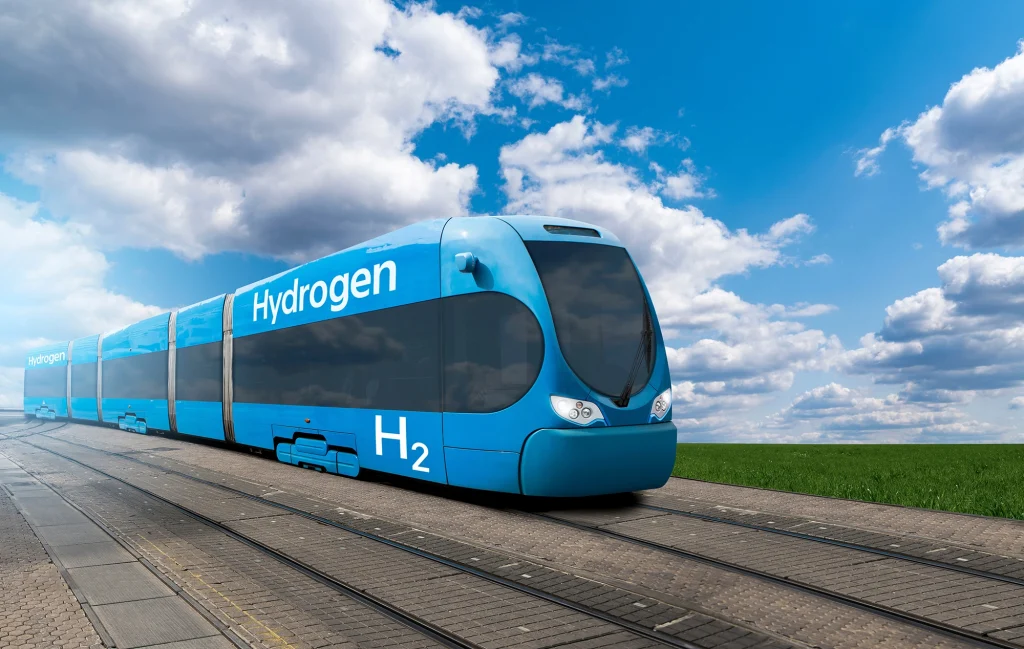
Seres Technologies is working on the development of hydrogen trains designed to replace diesel locomotives on non-electrified lines. The challenge lies in the design of reliable, safe and standalone propulsion systems, where standards and regulations in the hydrogen industry are not defined for railway applications. Seres Technologies guides hydrogen system integrators into selecting the right choice of components, drawing on 3D modelling, advanced simulations and risk analysis. This makes it possible to provide stronger, more efficient, durable and safer trains.
Unlock your potential at Seres Technologies
Joining Seres Technologies means you’ll be joining an international company that operates on a human scale, where a positive, collaborative-focused culture fosters a stimulating working environment. Thanks to the diversity of our projects across a wide range of sectors, each employee has the opportunity to take on ambitious technological and human challenges, developing their skills and contributing to major innovations.
Join our team
Would you like to join our team ? Please send us your resume :
FAQs
What is hydrogen and why is it mainly used in the mobility sector?
Hydrogen is a light gas used as a clean fuel, only emitting water and heat when feeding a fuel cell. It is therefore CO₂-emission free. It is a key lever in the decarbonisation of transport, particularly for heavy-duty vehicles (trucks, buses), non-electrified road trains and industrial engines (construction site engines, electric generators, etc.). Within the context of railway applications, its main benefit is its capacity to offer a significant degree of autonomy, in places where full electrification is difficult to achieve.
What career opportunities does Seres Technologies offer in the hydrogen field?
Seres Technologies offers varied positions in the hydrogen field, backed by innovative projects including the retrofitting of trucks and the development of hybrid vehicles. Seres Technologies is looking for experts in mechanical engineering, 3D modelling, operational safety and industrial risk management. Joining Seres Technologies means growing within a collaborative environment, and working on ambitious technical projects to drive sustainable mobility.
What expertise does Seres Technologies have in ILS?
Seres Technologies supports its customers in optimising the life cycle of its systems backed by recognised expertise in Integrated Logistics Support (ILS). In collaboration with instructing parties, Seres Technologies is involved from the design phase to ensure maximum availability and optimised maintenance for hydrogen facilities.
Seres Technologies’ expertise in ILS:
Logistics Support Analysis (LSA):
- FMECA (Failure Modes, Effects and Criticality Analysis)
- Reliability, testability and maintenance capacity studies
- LORA (Level of Repair Analysis)
- Development of Logistics Tree Structures
- Calculation of the LCC (Life Cycle Cost)
Optimisation of logistics support:
- Defining a proven maintenance plan
- Dimensioning spare parts stocks (LAR, LAI, LAS)
- Compiling the Logistics Support database
Documentation and training:
- Drafting technical documentation for maintenance and operations
- Designing training manuals and plans
- Developing predictive maintenance solutions
A commitment based on ILS Standards
The studies draw on international standards to guarantee effective logistics support that complies with regulatory requirements:
- Military standards: MIL-STD 1388-1A and MIL-STD 1388-2B
- Series-S Standards for ASDs: S1000D, S2000M, S3000L, S4000P, S5000F, S6000T
- European Standard: NF EN 60300-3-12 – Management of Operational Safety
Maintenance of Operational Condition (MOC)
Beyond design, Seres Technologies provides its inputs across the full equipment lifespan to ensure its availability and efficiency:
- Management of corrective and preventative maintenance
- Management of obsolescence
- Management and updating of support elements (stock optimisation, technical documentation)
- Management and optimisation of the CMMS (Computerised Maintenance Management System)